













Digital transformation
From career ladders to ecosystems: A strategic imperative for modern talent management


In our first blog post in our series, From career ladders to ecosystems: A strategic imperative for modern talent management, we talked about how the traditional, static job description is now a corporate liability. Designed for the stability of the 20th century, it traps organizations in outdated structures, creating skills blind spots that slow transformation.
To compete, enterprises must replace this fixed model with a competency-driven role architecture. In other words, a dynamic system that measures what people can do and can become, not just what they have been hired to do. To help organizations achieve this, we proposed a three pillar approach. In this piece, we’ll dive a little deeper into the first pillar, architecting a competency-driven roles architecture for clarity and alignment.
The real transformation journey begins in the boardroom. To embed a competency-driven model, the leadership must lead some fundamental mindset shifts to maximize the return:
The shift from the old to the new mindset redefines how organizations create and measure value.
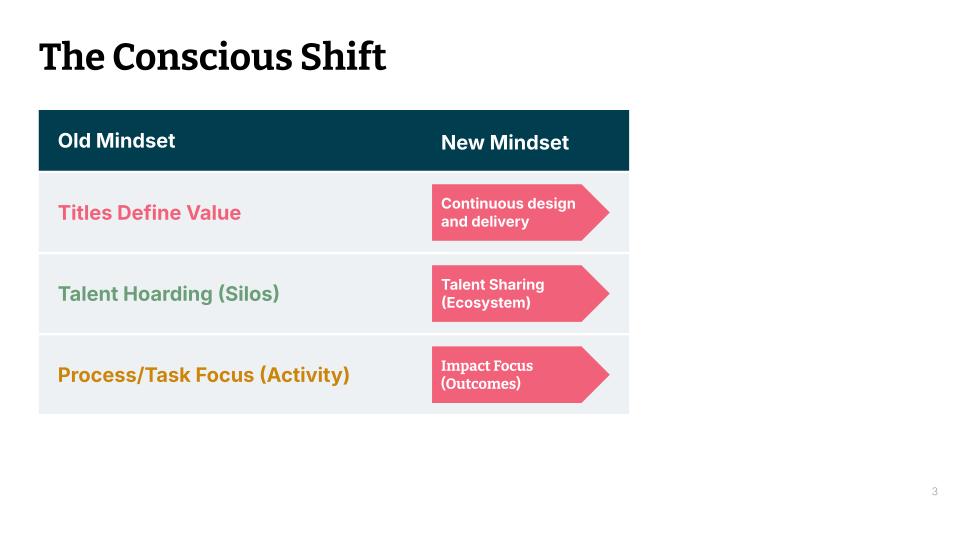
Titles no longer determine worth — capabilities do. Leaders move beyond managing headcount to building adaptive capability, embedding continuous learning and readiness for strategic pivots. Talent shifts from being hoarded in silos to flowing across ecosystems, maximising ROI through agile skill mobility aligned to the highest-impact priorities. The focus turns from activity to outcomes, anchoring performance on measurable business results rather than effort.
When senior leaders model these behaviours, the architecture becomes a system of empowerment, not control.
A modern role architecture redefines how work is structured and value is measured.
Horizontal alignment: Role families and functions. Roles should be grouped into logical families and functions, ensuring coherence in purpose, standards and progression. This provides immediate consistency across the enterprise.
Vertical clarity: Role levels and scope. Progression should be tied to impact, not tenure. Clear criteria — problem complexity, scope of influence and autonomy — define five to seven transparent levels of contribution. This clarity transforms advancement from a negotiation into a measurable process.
At the heart of the model is a dynamic competency taxonomy — the common language that connects business strategy to workforce capability.
1. Components of the taxonomy
Competencies must be organized to capture the full spectrum of required business capability:
Core competencies capture cultural DNA (such as collaboration and ethical judgment).
Functional competencies define the expertise required for a role family (things like cloud architecture or financial modeling).
Leadership competencies describe strategic impact ( for example, change leadership and systems thinking).
Each competency is aligned to proficiency criteria. These are concrete behavioural indicators of mastery at each role level. This converts career growth into an evidence-based journey that’s transparent, fair and measurable.
Shifting to a competency-driven system is complex. Four recurring challenges can derail progress, each requiring visible executive leadership sponsorship.
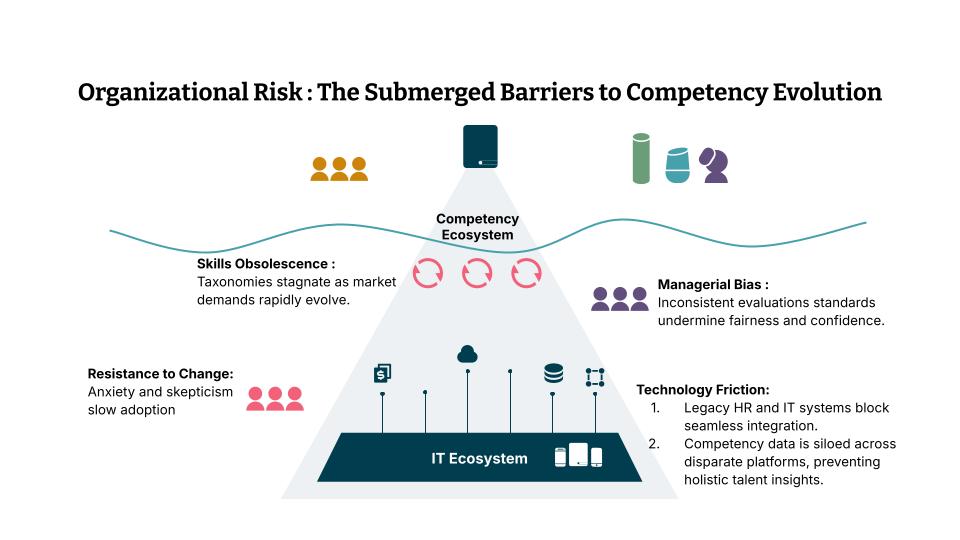
Organizations face growing risks from rapid skill obsolescence, managerial bias, technology friction and resistance to change — all of which threaten agility and fairness. As markets evolve, static taxonomies and inconsistent evaluations hinder competitiveness and trust. Legacy HR systems further fragment the talent experience, while cultural resistance slows the adoption of new models. To address these risks, enterprises must establish a skills governance council to keep competencies current, hold leaders accountable through calibrated KPIs, invest in unified talent platforms that integrate hiring, learning and performance, and use executive storytelling and recognition to drive cultural alignment and measurable gains in internal mobility and skills growth.
A competency-driven architecture gives leaders a live map of enterprise capability — who can do what today, and who can grow into what tomorrow. It replaces opaque hierarchies with transparent pathways, enabling faster deployment of skills to priority initiatives. This is how organizations move from managing people to mobilizing capability.
Once the foundational role architecture and competency inventory is in place, the next step is charting the course with a competency framework. This will define the specific vertical and horizontal pathways for growth for each role. This is the engine of the career ecosystem and will be covered in our next article.
Disclaimer: The statements and opinions expressed in this article are those of the author(s) and do not necessarily reflect the positions of Thoughtworks.