














Article
The action gap: All that customer insight. Now what?


AI has made it easier than ever to build products. But building faster hasn't necessarily led to better results. So what's missing?
I sat down with Marty Cagan, founder of Silicon Valley Product Group and one of the most influential voices in product management, to discuss what it takes to build successful products in the AI era.
From empowering teams to making better product decisions, here are five takeaways from our conversation. You can watch the full recording below.
Many companies aren't seeing better results despite the increase in development speed, and much of this comes down to their operating model.
In the traditional project model, stakeholders decide which features go on the roadmap, and teams are responsible for designing, building, testing and shipping them. Success is measured by output rather than outcome.
But as AI accelerates that process, leaders are starting to realize what the real bottleneck is.
A lot of people thought all that was wrong in the past was that it was too slow. Developers took too long. If only they could go faster. Now, even the most stubborn CEOs are starting to realize that's not really what the problem was. The real problem is figuring out what to build.
A lot of people thought all that was wrong in the past was that it was too slow. Developers took too long. If only they could go faster. Now, even the most stubborn CEOs are starting to realize that's not really what the problem was. The real problem is figuring out what to build.
The product operating model has proven to be more effective because it takes the opposite approach. Leaders set the strategic direction and desired outcomes, while empowered teams take responsibility for discovering and building solutions that achieve them.
Making this work means putting evidence at the center of decision-making. In our 3/3/3 approach, we use short, evidence-driven cycles to test our assumptions and change course when the evidence tells us to. The whole point is to avoid spending months building something that shouldn't have been built in the first place.
See more at 02:32
Product teams can spend a lot of time solving a problem, only to find that customers aren't choosing their solution. Why?
A lot of people hear that and think it means, 'Well, the product team should have made sure it was a real problem.' No, it's almost always a real problem. The issue is not, 'Is it a real problem?' The issue is, 'Did you come up with a solution that's significantly better than the alternatives?'
Understanding the problem is essential, but it's only half the equation. Customers have plenty of options, and it's up to product teams not just to solve the problem, but to come up with a solution that's compelling enough for them to pick over the alternatives.
That's why I prefer to think of an MVP as a minimum lovable product, rather than just a minimum viable product. The bar isn't simply “Does it technically work?” It's “Would customers choose it, recommend it and miss it if it disappeared?”
See more at 08:05
Marty famously introduced the four big risks product teams need to address when creating products and features:
In the traditional project model, teams are typically responsible for usability and feasibility. Value and viability, on the other hand, are often assumed to have been addressed by whoever requested the feature. Yet those are often the very risks that cause products to fail.
Preventing this starts with bringing together cross-functional teams with clear ownership of each area. In our work, product strategists focus on product fit, business viability and value; designers on usability, desirability and user experience; and engineers on technical feasibility, including agentic workflows, AI models and data risks.
Each discipline brings a different perspective, but the team shares responsibility for making sure no assumption goes untested and no critical risks fall through the cracks.
See more at 07:20
Forward-deployed engineering is getting a lot of attention, partly because of companies like Palantir and the value they're creating with it.
But what makes it valuable isn't just the engineering. It’s the product operating model applied to custom solutions: a team with direct access to users, data and stakeholders, working out what to build rather than building to someone else’s specification.
If you're trying to solve a hard problem for a client, whether it's in the security world or whether it's in aerospace, wherever, you need to be there. You can't just say, ‘Oh, the stakeholders are going to tell me what our customers need.’ That doesn't work.
At Thoughtworks, rather than embedding a single engineer with a client, we deploy cohesive, full-stack teams spanning product, design, engineering, and data and AI. Those teams have the trust and freedom to discover a solution that works, not simply execute a predefined roadmap.
As John Doerr famously puts it, companies need missionaries, not mercenaries. That's where the real value of forward-deployed engineering comes from: not just supplying the technical skills to build a solution, but providing the proximity and empowerment to figure out what the right solution should be.
See more at 19:18
When I asked Marty what one thing people should change on Monday to improve how they build products, his answer was simple: set up an LLM as a 24/7 product coach.
Marty learned the craft of product from managers who coached him weekly. Today, AI makes that kind of guidance available on demand, helping practitioners work through difficult decisions, choose the right techniques and measure outcomes.
I've found it equally useful as a partner that challenges my thinking, bouncing ideas between models to explore different perspectives and question assumptions. Don't just ask for answers or encouragement. Ask it to push back on weak ideas and help you see what you might be missing.
Marty's recent article, Product Coaching and AI, explains how to get started.
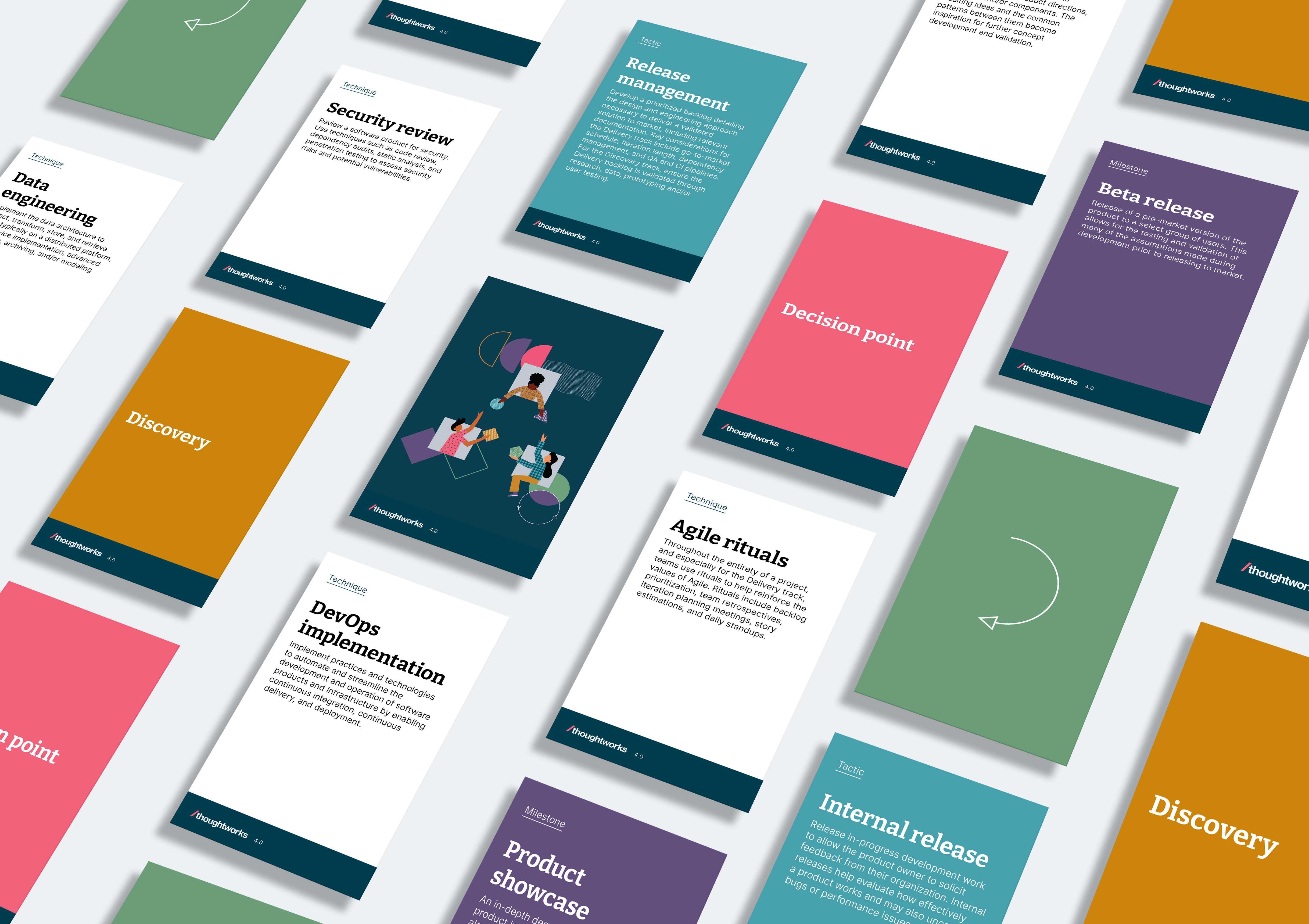
And if you're looking for more ways to strengthen your product thinking, our Product Thinking Playbook is another useful resource, built on many of the principles Marty has championed throughout his career.
See more at 45:50
There's plenty more to unpack from our 50-minute conversation. The full recording also covers:
Marty's take on SAFe, Agile and the pursuit of predictability
How far AI can go in replacing human product judgment
Why AI won't replace enterprise SaaS software overnight
The roles and skills teams need to make the product model work
Watch below.