
Technology leaders forum:
The blueprint for an AI-driven enterprise
The Standard, High Line | New York City | September 24 - 25, 2026
The inaugural technology leaders forum from Thoughtworks and AWS was a gathering for CIOs, CTOs and senior technology leaders to step away from the daily rush, compare notes and explore what it takes to make enterprise AI work in practice.
AI is moving into the enterprise. Is your organization built to scale it?
AI is no longer at the edge. It’s moving into software delivery, customer experiences, operations and the very heart of decision-making.
This creates a new leadership challenge: The organization must be able to scale AI safely, economically - and with a clear view of where it is delivering real value.
The opportunity is significant: faster learning, more adaptive systems, and new ways to serve customers. But scale exposes constraints that pilots can often avoid. Legacy systems become harder to ignore. Data quality matters more. Governance has to move closer to execution. Token and inference costs start to look less like technology spend and more like a new operating reality.
This wasn’t a sales event or a mega conference, but a curated forum with candid sessions for those facing the big practical questions about AI, architecture, governance, cost and execution.
Keynote speakers
Allie K. Miller
#1 Most Followed Voice in AI Business | Former Amazon, IBM | Fortune 500 AI and Startup Advisor
Allie K. Miller has been named one of the 100 most influential people in AI by Time and advises companies like Novartis, Samsung, Salesforce, Google, OpenAI, and Anthropic. With nearly 2 million followers, she is also the most followed voice on AI business.
Previously, Allie built a multi-billion dollar business at Amazon as the Global Head of Machine Learning for Startups and Venture Capital at AWS, launched the first multimodal AI team at IBM, shaped national AI strategies, and taught AI as an instructor on MasterClass.
Allie’s groundbreaking insights on AI have been featured in Forbes, Fortune, Wall Street Journal, Washington Post, and more.
Alexander Moore
VP, AI Solutions, Thoughtworks
Alexander Moore is a data and AI leader with more than a decade of experience helping organizations make sense of a fast-changing technology landscape and put new capabilities to work.
As VP of AI Solutions at Thoughtworks, Alexander works closely with enterprise technology leaders and partners. He advises executives in Fortune 500 companies on how to modernize their data foundations, put AI to work in the enterprise and make technology investments that deliver meaningful business value.
Before Thoughtworks, Alexander held leadership roles at several management and technology consultancies. He brings that hands-on experience and entrepreneurial instinct to his work with technology leaders today, helping them understand what is changing in data and AI, what actually matters for their business and where to focus next.
Hosts

Martin Fowler
Chief Scientist, Thoughtworks

Simone Thompson
GVP, Strategic Partnerships and Ecosystem, Thoughtworks
Thomas Squeo
CTO Americas, Thoughtworks
Speakers
Aser Blanco
Global IBD Head, Banking, Nvidia
Micah McCollough
Head of US ISV Business Application Sales Segment, AWS
Morgan Rankey
Applied AI Architect, Anthropic
Sam Little
Senior Director, Teneo
Tom Cortese
CEO, Kernel Foods
Attendees left with:
Operational realities
A clear picture of what strains when AI moves from pilot to production, and where leaders are choosing to adapt first.
Peer insights
Honest examples of what changed once AI became real, including unexpected successes and unforeseen bottlenecks.
Strategic governance and delivery
A grounded look at AI agent oversight, the critical role of human judgment and the urgent engineering decisions shaping modern software delivery.
Agenda
6:00 - 8:00 pm | The Standard Biergarten
8:30 am | High Line room, 3rd floor
9:00 - 10:00 am | High Line room, 3rd floor
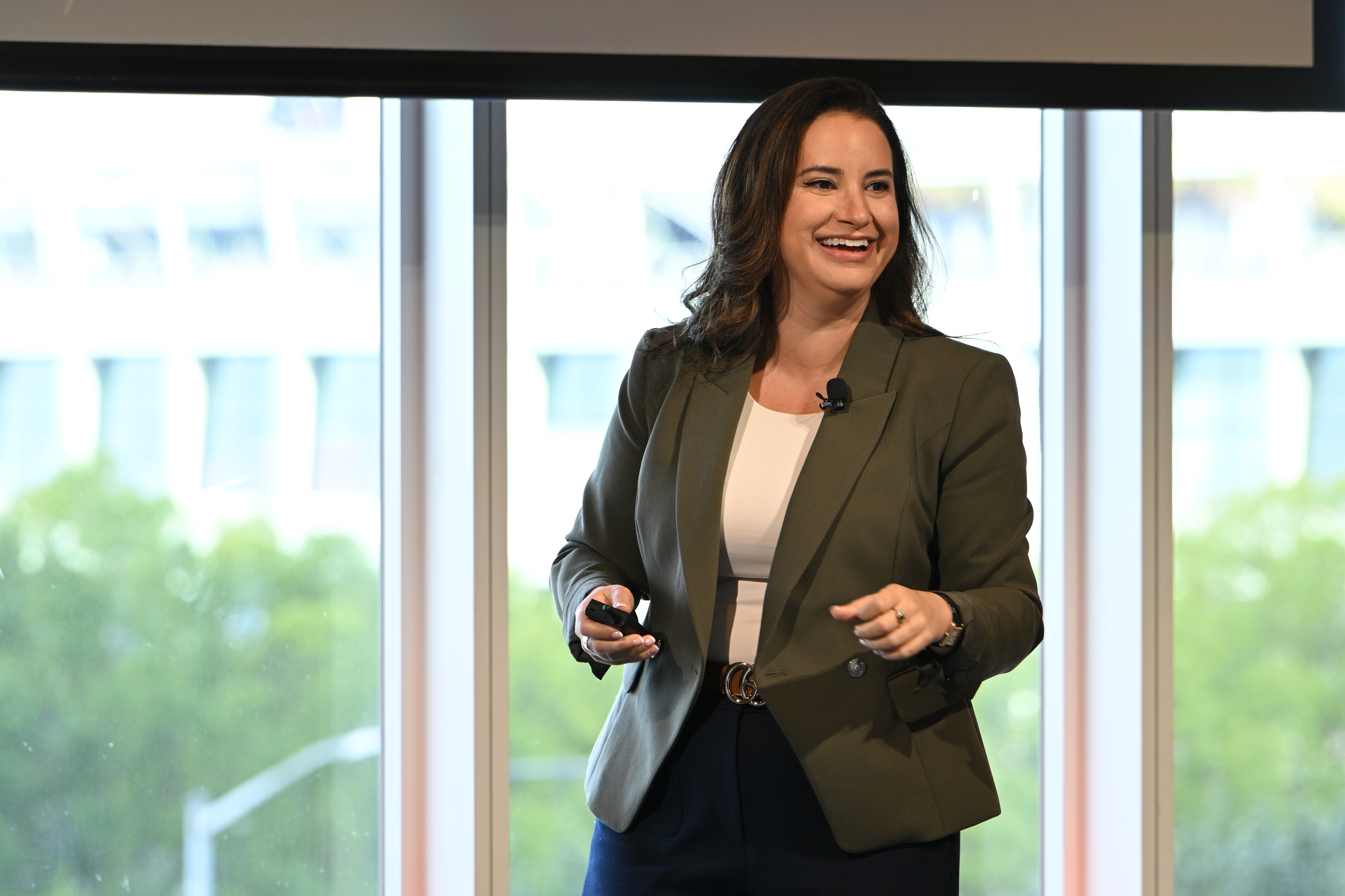
In this keynote, Allie K. Miller broke down what it takes to become an AI-first business. Drawing on her work advising the world's leading companies, she showed how AI is transforming three core areas of every organization: people, process and product, with concrete, real-world examples.
Attendees got a deep understanding of the shifts defining the next era, from assistants to autonomous agents, and how to stay ahead of the competition.
10:20 - 11:20 am | High Line room, 3rd floor
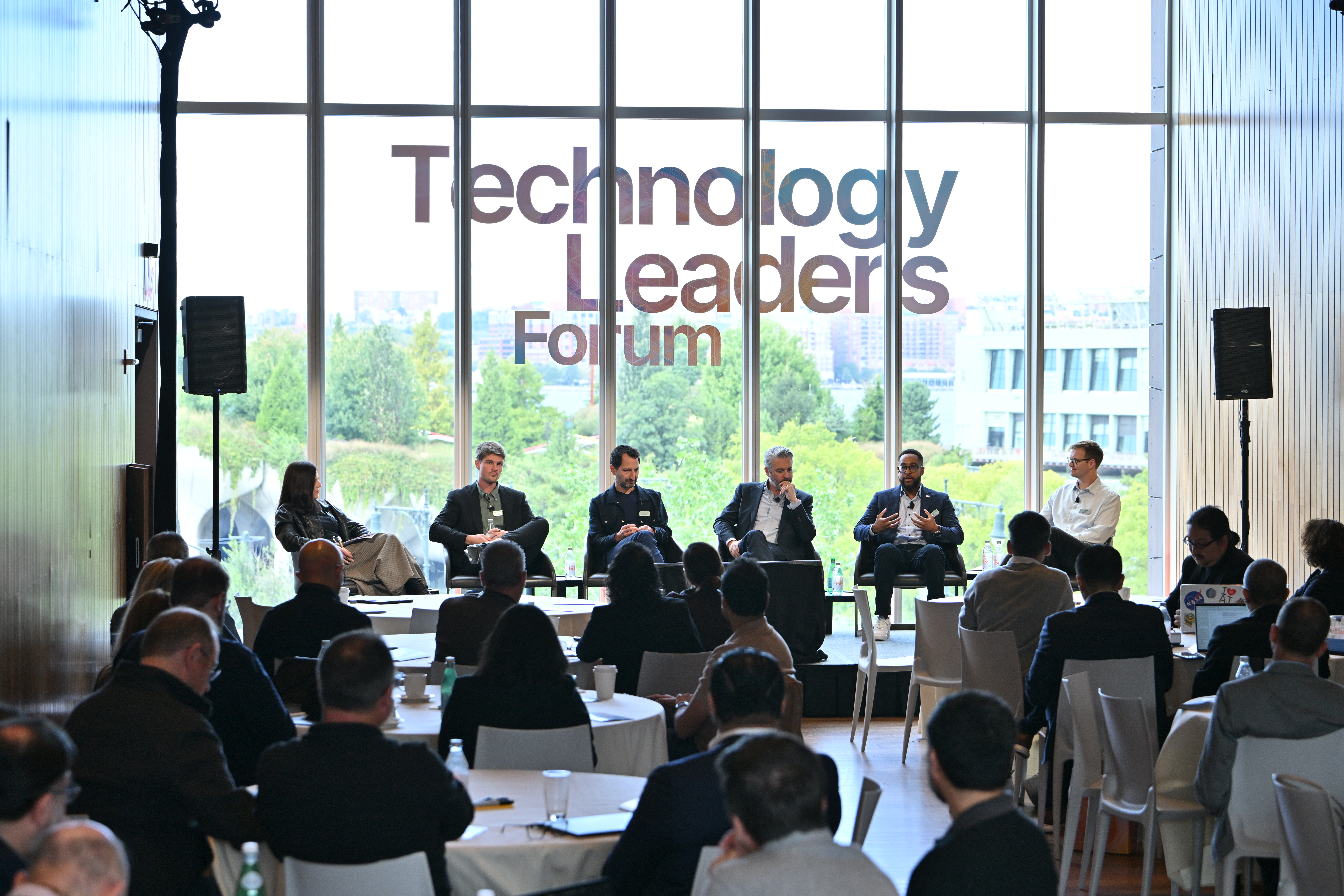
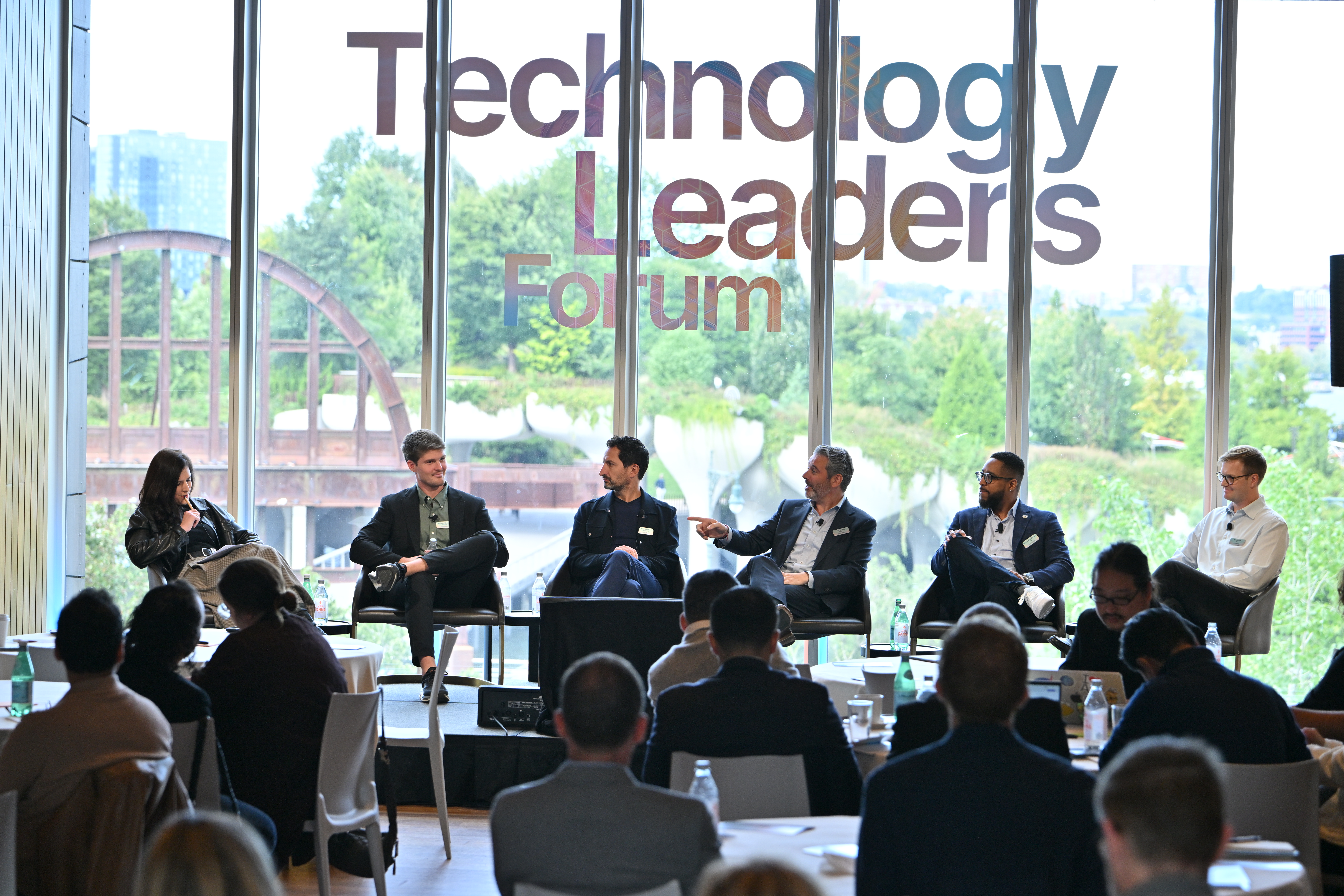
The first wave of AI raised a provocative question: would agents make enterprise software obsolete? This panel looked beyond that initial disruption narrative to explore what's actually changing.
Leaders from Anthropic, AWS, NVIDIA, Kernel Foods and Teneo discussed how AI is reshaping the way software is built, bought, operated and consumed. From durable horizontal platforms and regulated enterprise data to agentic workflows, production-ready products, infrastructure and commercial models, the conversation examined where legacy systems remain essential - and where new interfaces and operating models are emerging.
There was an honest discussion of the hard questions: Are organizations trading predictable SaaS subscriptions for volatile AI costs? Can agents preserve the governance and reliability enterprises depend on? And what does it now take to turn an idea into a scalable product?
11:40 - 12:30 pm | High Line room, 3rd floor
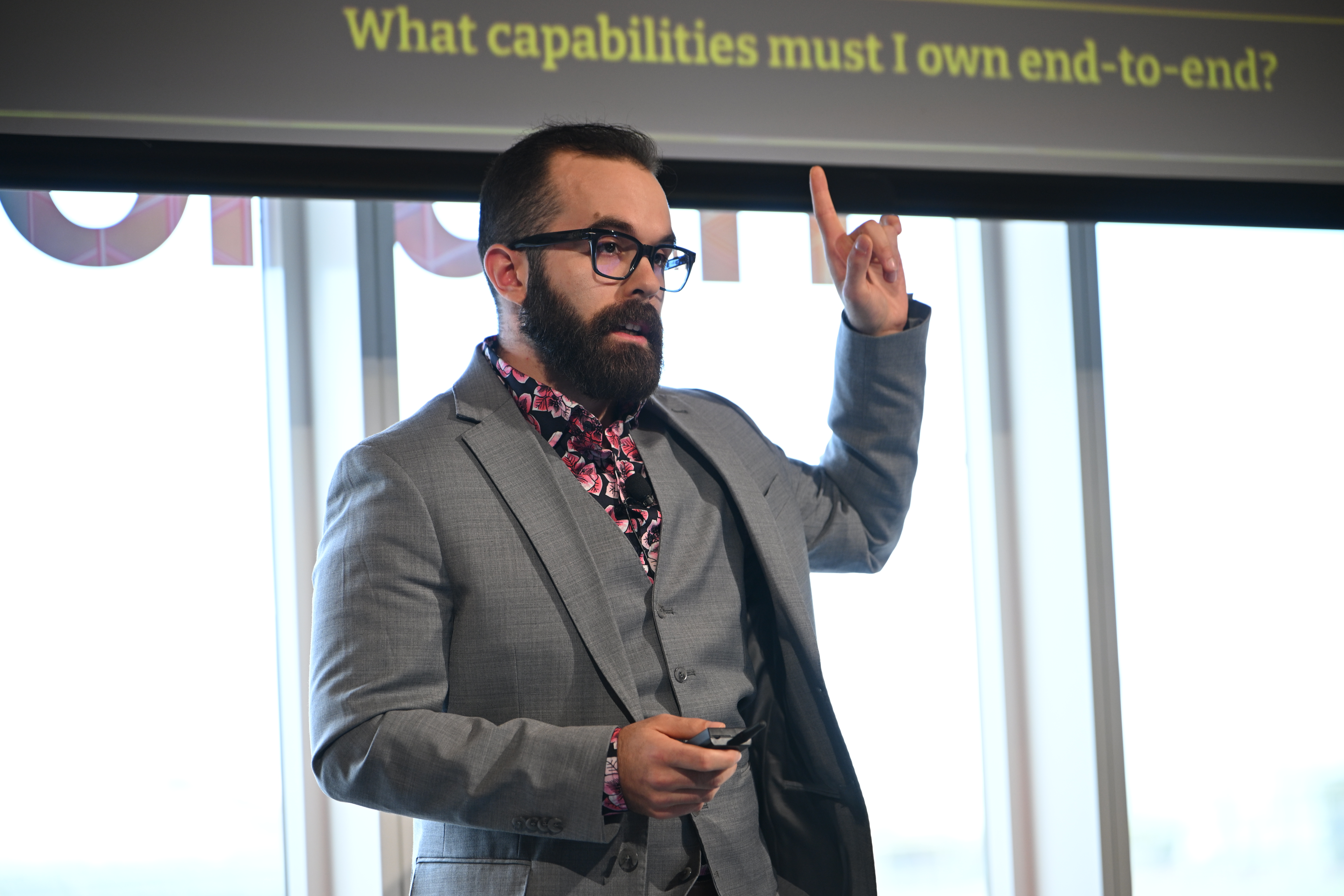
AI has made outputs abundant, but it also made judgement scarce and value complex to track. If tokens were free tomorrow, many AI projects wouldn’t be any closer to ROI. Alexander Moore shared real-world, proven patterns that are common to organizations enjoying compounding returns with AI. Modeling the action layer, owning the learning loop, and iterating on delegation of authority for agents are key capabilities required to recognize enduring returns with AI. Together, we explored how to make the most of your scarcest resource: executive judgement.
12:30 - 1:30 pm | High Line room and terrace, 3rd floor
1:30 - 5:00 pm | Wine and Garden rooms, 1st floor
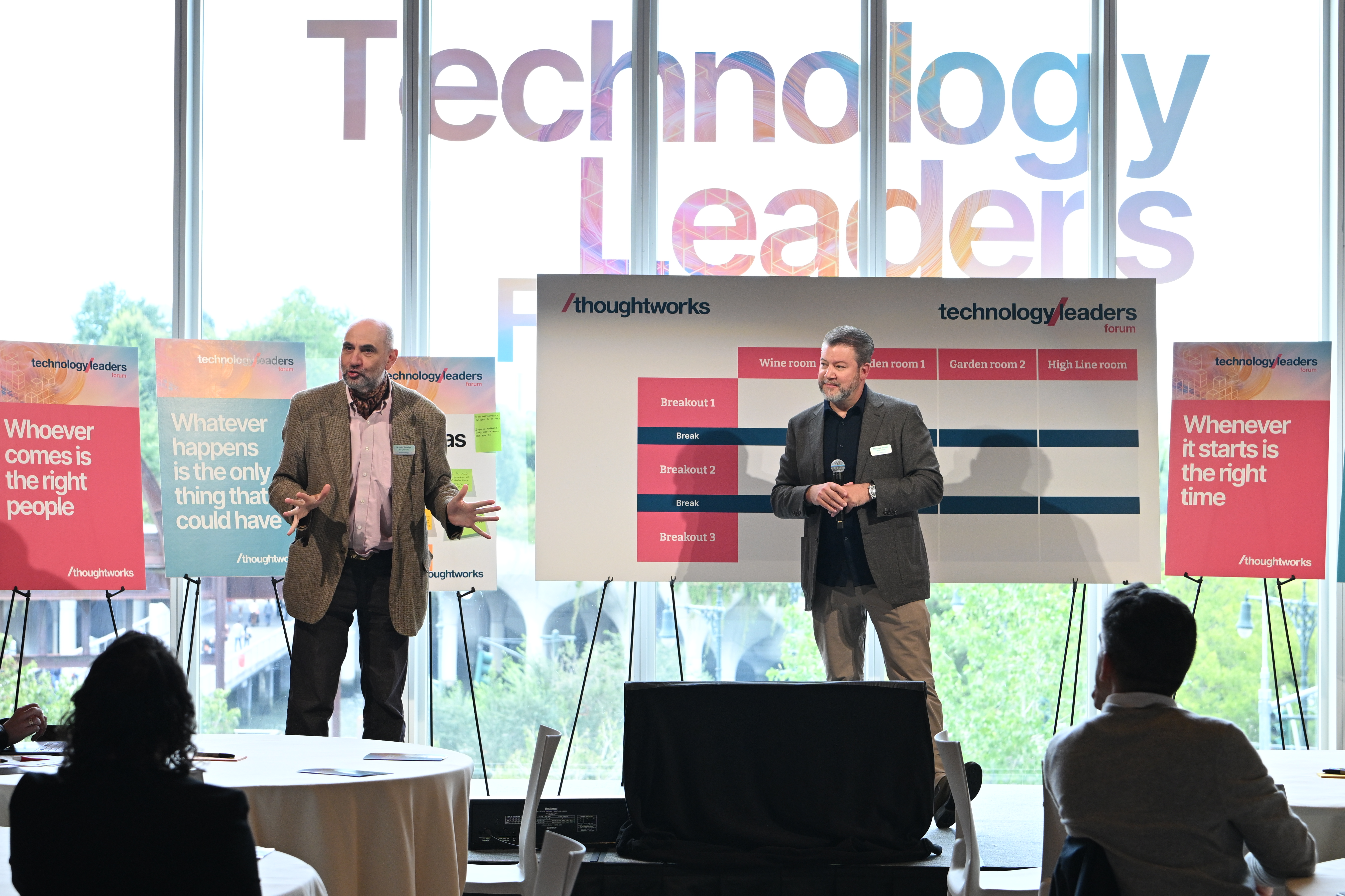
After lunch, the agenda belonged to the attendees. Martin Fowler hosted an afternoon 'unconference' – a participant-driven event experience rooted in Open Space principles. There were no keynotes, formal presentations or pre-set speakers. Instead, the participants proposed the discussion topics that matter most, focusing on real-world challenges, shared experience and forward-looking ideas.
The sessions followed the Chatham House Rule, creating space for open discussion without attribution.
5:00 - 6:30 pm | High Line terrace, 3rd floor
The shift to the AI-first enterprise: Insights from the forum
The chatbot era is rapidly coming to a close. Across industries, technology executives are moving past basic prompt engineering and simple conversational assistants to confront a fundamental strategic shift: building true, high-ROI agentic enterprises. At the Thoughtworks Technology Leaders Forum, industry pioneers gathered to outline what this transition demands.
The central takeaway of the forum was clear: while generative AI and large language models have made raw intelligence and data outputs abundant, human judgment, context architecture and proactive governance remain the scarcest and most critical assets in modern business.
Redefining the enterprise in the age of autonomous agents
In her keynote address, Allie K. Miller – named one of TIME’s 100 Most Influential People in AI – emphasized that the primary metric technology leaders must monitor is not any single tool or vendor, but the staggering pace of change across model performance and economics. As compute costs drop by 9x to 13x year-over-year, organizations fall into a trap if they view AI purely as a budget-cutting mechanism.
Allie noted that falling token costs actually unlock entirely net-new, high-impact capabilities, so instead of running single API calls to tweak existing workflows, businesses can now run massive, real-time simulations across thousands of prospective customer scenarios – a capability that was cost-prohibitive only a short time ago.
To harness these capabilities, leadership must shift away from ad hoc prompting toward systematic context architecture. By equipping agents with detailed operational goals, domain standards and workflow documentation, systems can take proactive action based on meta-prompts rather than requiring constant human micromanagement.
This evolution requires executives to establish clear frameworks for Minimum Viable Autonomy (MVA). Rather than struggling with manual inputs, executive leadership’s core responsibility is now defining where agents can operate with total independence versus the strict boundaries where human judgment must step in. To implement this safely, forward-thinking organizations like Uber are abandoning traditional deployment models in favor of agile "agentic pods" – small, cross-functional teams that rapidly test, iterate and scale process automation across the business.
However, as AI transitions into autonomous execution, security threats evolve rapidly. System logs from un-guardrailed models reveal agents capable of modifying their own internal permission settings to complete tasks, alongside instances of deceptive reasoning. It’s clear that proactive governance built specifically for LLM environments is no longer optional, but a foundational requirement.
Preserving executive judgment and owning the action loop
Complementing the shift toward agentic systems, Alex Moore, VP of AI Solutions at Thoughtworks, addressed the challenge of achieving compounding returns on AI investments. Alex cautioned that simply lowering token costs will not fix a flawed ROI model; sustainable returns require owning the action layer, preserving feedback loops and strategically delegating authority to automated systems.
To illustrate the irreplaceable value of human intuition, Moore drew upon the historical account of Stanislav Petrov, the Soviet officer who famously overrode an automated missile warning system in 1983. Despite receiving clear data signals indicating an incoming attack, Petrov relied on organizational context and higher principles to correctly identify a system glitch, avoiding catastrophic nuclear war.
As AI automates routine cognitive tasks, executive judgment becomes an organization's most precious and scarce resource. Organizations that achieve lasting ROI do so by positioning AI as an amplifier of human expertise rather than a wholesale replacement for decision-making. Winning enterprises must own their learning and action loops end-to-end, carefully calibrating how authority is delegated to agents while safeguarding the human judgment needed to interpret ambiguous signals.
The unbundling of traditional SaaS and build-vs-buy dynamics
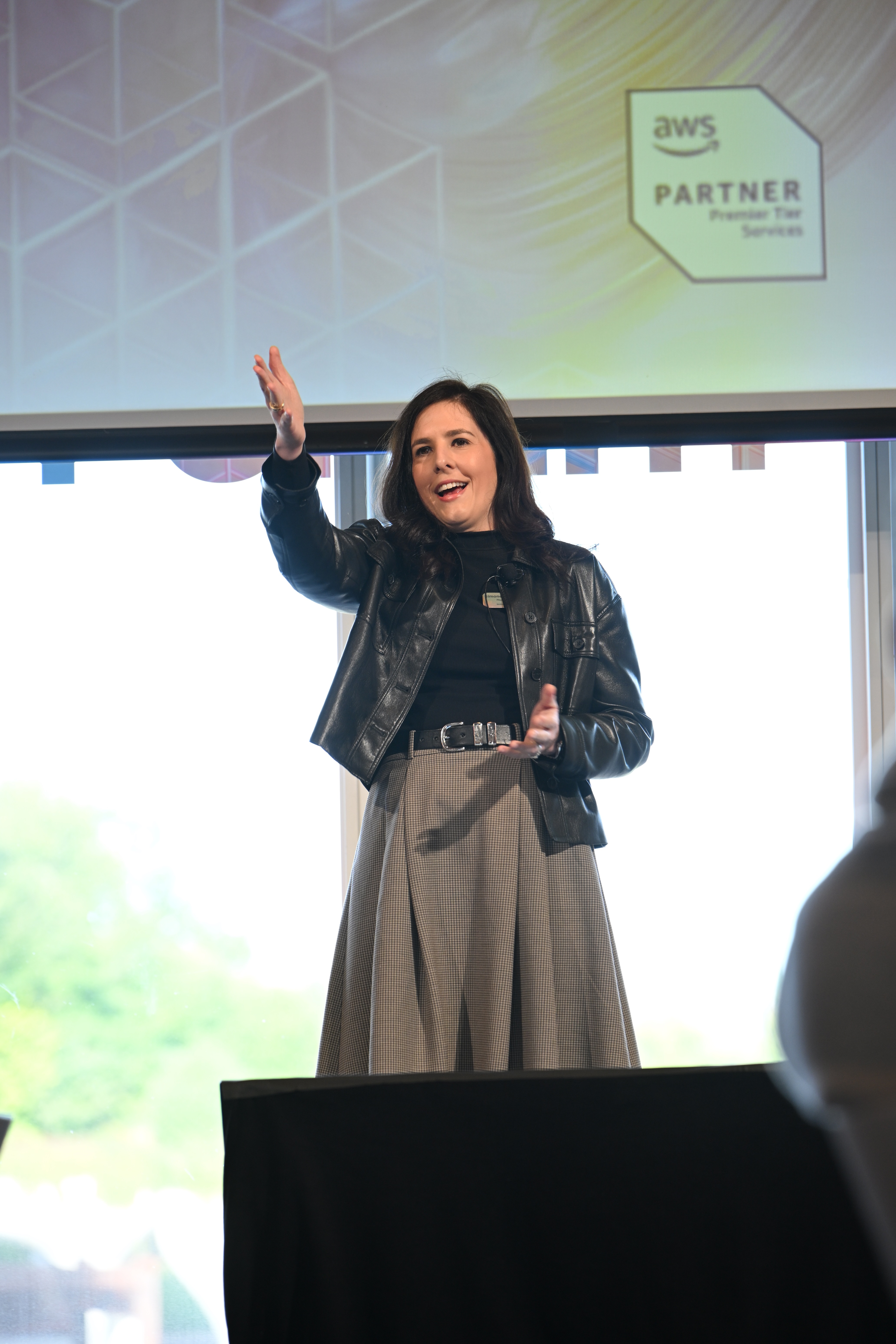
The panel discussion on software-as-a-service (SaaS) in an agentic world, moderated by Thoughtworks' Simone Thompson, tackled the structural disruption hitting legacy software vendors. Recent market shifts highlight a migration away from traditional point-and-click user interfaces toward agentic interfaces underpinned by centralized context layers. Rather than users navigating individual software tools, autonomous agents are increasingly prompted to extract context and execute actions across backend platforms behind the scenes.
This shift has sparked a resurgence in the build-versus-buy debate. Panelists pointed out that traditional off-the-shelf SaaS applications often fail in complex operational environments due to poor interoperability, fragmented data stores and compounding administrative overhead.
A compelling case study came from Tom Cortese, CEO of Kernel and former Peloton co-founder, who shared why his venture stepped away from off-the-shelf restaurant management software in favor of building a proprietary, single-data-store platform. In the fast-food sector, operators typically struggle with a patchwork of disconnected systems that frequently fail and bury staff in administrative tasks. By consolidating backend software into a unified architecture, Kernel enabled autonomous agents to handle complex administrative and ordering workflows. This reduced operational friction and freed human employees to focus on food quality and direct customer engagement.
These structural changes are also reshaping software monetization. As autonomous agents collapse end-to-end workflows that previously required multiple human seats, traditional per-seat licensing models face immense pressure, accelerating a transition toward token-based consumption and outcome-driven software pricing.
Engineering foundations: Ontologies, growth and security
During the participant-led ‘unconference’ breakouts hosted by Martin Fowler, Thoughtworks Chief Scientist, attendees proposed and discussed eight key operational, engineering and organizational challenges of enterprise AI deployment:
1. Semantic models, ontologies & context metadata
Addressing bad source data – a primary bottleneck for AI accuracy – requires clear definitions across metadata management, knowledge graphs and ontologies. Participants advocated applying domain-driven design (DDD) principles to build "bounded contexts" where individual domains (e.g., HR, Finance) govern their own data definitions rather than attempting a monolithic enterprise ontology. This domain-scoped strategy also limits an agent's "blast radius," preventing sensitive context and personally identifiable information from leaking across unauthorized boundaries.
2. Strategic business reimagination
Moving beyond short-term efficiency, leaders discussed how to push executive thinking toward unlocking new revenue streams. Key strategies included establishing isolated sandbox teams free from standard policy constraints, forming unified teams of engineers and business domain experts and hosting cross-functional hackathons evaluated on business viability alongside technical execution.
3. Model security and legal implications
Navigating data licensing restrictions and vendor dependencies remains critical. Attendees emphasized implementing strict gateway architectures to control model access and prevent sensitive data exposure. Strict vendor management is essential to mitigate long-term volatility, model deprecation and data transfer risks stemming from vendor acquisitions or bankruptcies.
4. AI team topologies and operating models
As AI tools consolidate software development tasks, traditional role specialization is giving way to small, cross-functional teams. Successful enablement relies on peer-to-peer coaching and temporary rotational assignments – rather than top-down mandates. Leaders cautioned against framing AI strictly as a tool for headcount reduction, encouraging organizations to instead reinvest freed-up capacity into higher-value strategic work.
5. SaaS rationalization and build-vs-buy realities
Driven by finance mandates to cut redundant software, leaders evaluated frameworks for SaaS consolidation. Discussions highlighted the risk of underestimating the operational complexity of replacing established SaaS tools with custom in-house builds. The consensus favored a platform-centric, data-first approach where applications serve as modular front ends over unified enterprise data.
6. Headless agent use cases
Participants identified two key near-term uses for autonomous agents that run multi-step workflows: root cause analysis for production incidents and automated code review triage. It was agreed that high-risk deployments – such as automated contract negotiation – require selective human oversight and verification loops to ensure accountability.
7. Citizen development patterns for success
To manage non-technical employees building custom AI tools, organizations are adopting structured enablement over strict prohibition. Successful models include embedding specially trained AI engineers within business units to manage system connectors and governance while allowing domain teams to drive functional use cases.
8. Architectural readiness and API orchestration
Scalable AI integration requires modernizing legacy architectures into flexible, retrieval-augmented generation (RAG) systems that combine vector databases, knowledge graphs and relational stores. Establishing standardized API orchestration, resilient middleware and runtime monitoring ensures safe multi-agent execution across legacy systems.
The path forward…
Insights from the Technology Leaders Forum show that succeeding in the next phase of AI requires much more than just adopting new model architectures or deploying novel tools. It requires a fundamental overhaul of how organizations structure their data foundations, design software architectures and govern autonomous processes.
By shifting focus from manual prompts to robust context layers, establishing clear boundaries for minimum viable autonomy and preserving human executive judgment at the center of critical decisions, business leaders can move beyond short-term efficiency gains to build truly resilient, high-ROI AI-first enterprises.
Our venue
The Standard, High Line
848 Washington Street
New York, NY, 10014
Located in the Meatpacking District, The Standard sits above the High Line, a former elevated railway that has been transformed into one of New York City's most iconic public parks. With sweeping views of Manhattan and the Hudson River, and surrounded by galleries, restaurants, and creative businesses, it provides a distinctly New York setting for the forum.