


For years, I knew XConf from behind the scenes. I helped organize five editions of Thoughtworks' technology conference, working on everything from speakers and logistics to budgets and event planning. I knew what it took to get someone onto that stage. I just never imagined I'd be the one standing there.
But at XConf Europe 2026, that's exactly what happened. I was there to present the Clarity-First Method, a framework I developed for building products with AI while applying product thinking and engineering practices. I demonstrated Vivian, a women's health educational platform I built fully with AI, without writing a single line of code. It even received a 6/10 architectural quality score when evaluated against engineering standards.
The strange part? Despite all of that, I still struggled to think of myself as technical.


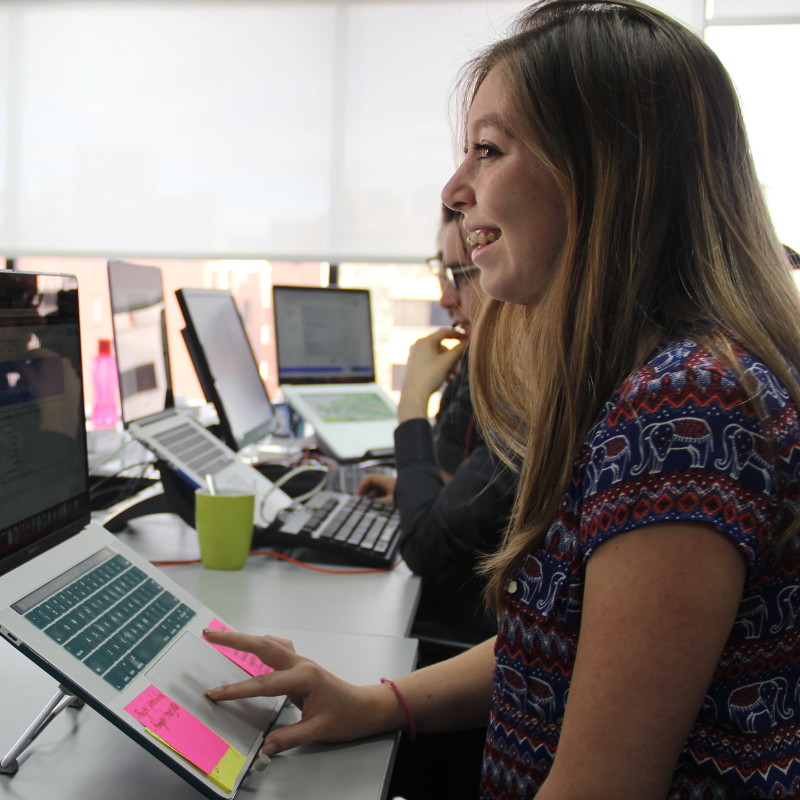
How I got here
I joined Thoughtworks Ecuador at 23, working in Marketing on initiatives like Geek Nights, Code in the Dark, Women in Tech campaigns and XConf. After three years, I felt confident in my role and had no plans to leave Ecuador.
Then an opportunity came up to help build Thoughtworks' marketing presence in Spain. COVID delayed my relocation for a year, but I eventually moved to Barcelona, where I continued growing across recruitment, demand and field marketing. After two years, I realized I wanted a different challenge. I enjoyed Marketing, but I missed the feeling of learning something completely new.
Business Analysis caught my attention because many of the skills felt familiar: strategic thinking, stakeholder management, communication and facilitation. The technical side, however, was new territory.
I enrolled in a Master's degree in Business Intelligence and Data Analytics and spent nine months learning from a Lead Business Analyst who became my mentor. With support from my manager and colleagues, I eventually moved into Consulting.
My first project involved building data products for a healthcare client. During a data modeling workshop, I was focused on keeping the session on schedule until a solution architect helped me understand why discussing specific data gaps was essential even if this means to not keep the original agenda. I realized I still had a lot to learn about the technical side of the work, and most important to adapt my brain to be able to pivot faster.
After that experience I started to ask more questions to my technical colleagues and give myself time to understand unfamiliar concepts, and I was enjoying getting to know the technical side of a project, not just the business part.
Rethinking what it means to be technical
For a long time, I associated being technical with writing production code. Since I wasn't doing that, I didn't consider myself a technical person. Working with AI started changing that.
I began experimenting with tools like Lovable and Claude Code, eventually building Vivian by defining requirements, structuring prompts, testing features and reverting changes when something didn't work and I developed this sense to make rapid decisions on when to delete code wherever I was not happy with the result.
Even though I wasn't writing the code myself, I was making decisions about what the product needed to do, how it should work and whether the results met my expectations and orchestrating AI tools and agents to do it for me. Still I kept doubting myself of not being technical.
What I built in 48 hours, I ended up refining and scaling it to be a proper product in just 9 months and eventually that experience became the foundation of my Clarity-First Method, and my proposal for XConf Europe 2026. I submitted it without expecting much. When it was accepted, I was excited, but also nervous. Was I really going to talk about building software with AI in front of an audience of experienced technologists?
Chris Ford, our Chief Technical Architect, encouraged me to tell the story. He helped review my presentation and rehearse, while colleagues Amy and Victoria supported me with the technical terminology. Having people who believed in what I was sharing made a difference, especially when I wasn't entirely convinced myself.
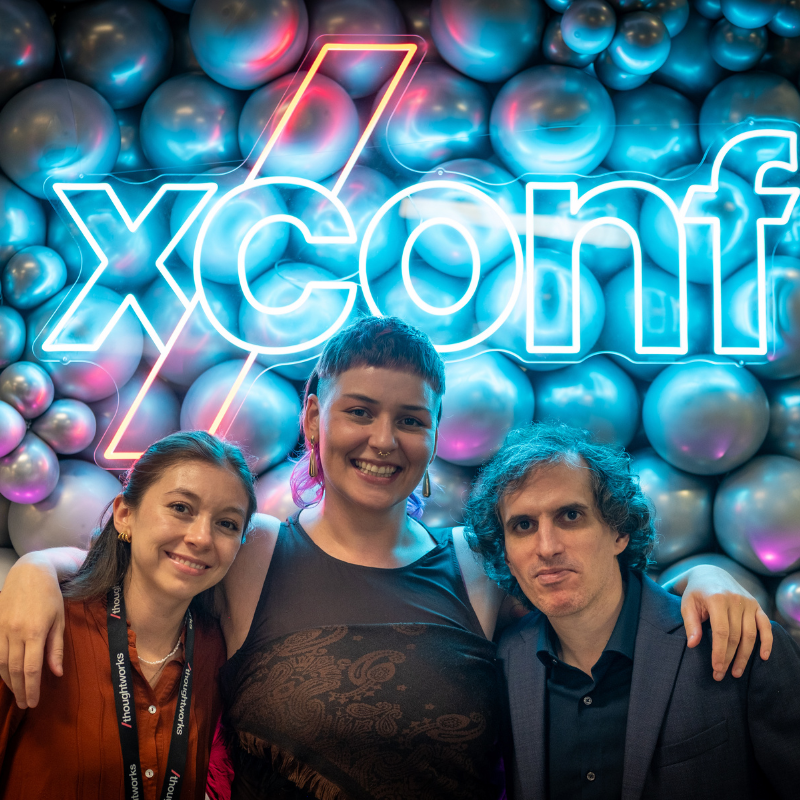
From backstage to the XConf stage
Arriving at XConf as a speaker felt completely different. For years, I had spent event days thinking about schedules, vendors, speakers and everything that could go wrong. This time, Eylem from the Marketing team was taking care of the logistics, and I could finally sit in the audience and enjoy the sessions. For the first time, I experienced XConf from the other side.
I shared the Clarity-First Method, demonstrated Vivian and explained how someone without a traditional programming background could use AI to build products while maintaining engineering discipline. After my talk, people came up to me and asked why I kept saying I wasn't technical.
That question stayed with me.
I had spent years believing technical ability meant writing code manually. Yet there I was, presenting a product I had built, explaining the decisions behind it and discussing its technical quality with people whose expertise I admired. Maybe my definition of technical had been too narrow all along.

Still learning, just differently
Today, I work as an AI Product Researcher with the AI/works research team, exploring agentic workflows, AI tools and product development.
I also participated in an internal AI Hackathon with my teammates Amy and Vitoria. Together, we built Sensible Harness, a CLI tool that transforms standard repositories into governed, AI-First Software Delivery environments by embedding Thoughtworks engineering practices. Our project placed second in the European competition.
The skills I developed in Marketing, Business Analysis and Product, from understanding people's needs to defining requirements and working through ambiguity, are still part of what I do every day.
When I joined Thoughtworks at 23, I never imagined I'd move from Ecuador to Spain, from Marketing into Product, or from organizing XConf to speaking about AI on its stage. If there's one thing I'd tell someone considering a career change, it's to talk to people doing the work you want to do, find mentors, ask questions and give yourself time to learn.
You don't need to have everything figured out before taking the first step. I certainly didn't.
Disclaimer: The statements and opinions expressed in this article are those of the author(s) and do not necessarily reflect the positions of Thoughtworks.