















For the past two years, enterprise technology has been dominated by an existential question: Will AI agents make traditional software obsolete?
When AI models began executing complex workflows, a wave of panic swept through public markets. Investors questioned whether the seat-based, multi-billion-dollar Software-as-a-Service (SaaS) industry was about to be eroded by autonomous software.
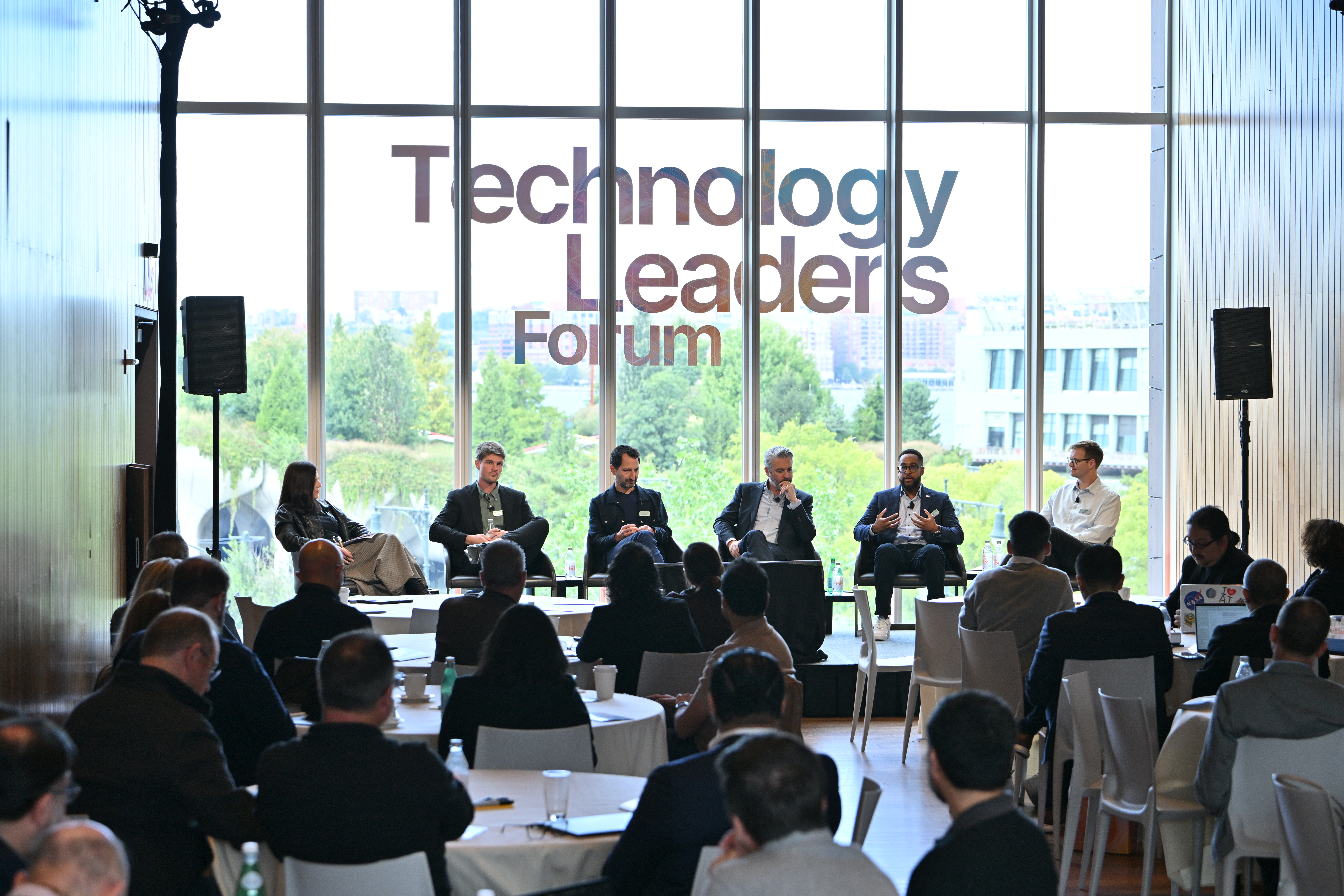
However, at the Technology leaders forum: The blueprint for an AI-driven enterprise in New York City, industry leaders gathered to share a more refined vision.
Moderated by Simone Thompson, Thoughtworks GVP, Strategic Partnerships and Ecosystem, "The future of SaaS in the agentic world" panel brought together senior executives from across the AI value chain:
Aser Blanco (Global IBD Head of Banking, NVIDIA), Micah McCollough (Head of U.S. ISV Business Application Sales Segment, AWS), Morgan Rankey (Applied AI architect, Anthropic), Sam Little (Senior Director, Teneo) and Tom Cortese (CEO of Kernel Foods and Co-founder of Peloton).
Rather than debating the death of SaaS, the panel discussed how software is being fundamentally reshaped in four core areas: build vs. buy decisions, business and pricing models, human operating cultures and system architecture.
The build vs. buy equation: Why builders are reclaiming the stack
For more than two decades, enterprises favored buying off-the-shelf SaaS to avoid the burden of software maintenance. Today, this dynamic is rapidly shifting as agentic capabilities reduce software development overhead.
Tom Cortese, CEO of Kernel Foods, explained why his company chose to build its own proprietary back-office operating system rather than buy legacy restaurant software.
"All these operators run on a hodgepodge of loosely interconnected systems… One goes down, and you don't know where the cascade began or ended," Tom explained. "To get insights, you have to look in six different places. Administrative tasks continue to compound ... We wanted to build a simpler system with one application and one centralized data store, such that we can begin to use agentic tools to take action for our restaurant managers."
By controlling their own context layer and data store, companies like Kernel can attach AI agents directly to operational pain points, dramatically reducing manual administrative work so employees on the frontline can focus on human-focused tasks.
AWS’s Micah McCollough highlighted that successful software vendors are adapting to this shift. Rather than attempting to lock buyers into closed environments, modern vendors are now opening up their systems. "Those that are winning are figuring out how to integrate seamlessly into a customer's workflow without dirtying their desktop or creating another screen for their folks to use," Micah noted.
Pricing evolution: The fall of seats and the rise of the hybrid model
The shift from human-executed software to agent-executed workflows directly challenges the traditional seat-based licensing model. If an agent performs the work of five people, charging per human license becomes a broken metric for value.
Sam Little, Senior Director at Teneo, shared findings from Teneo’s research that tracks hundreds of U.S. software vendors:
The fear realignment: The initial market fear of agents replacing white-collar jobs has evolved into a vendor fear: users are deriving massive value from AI, but software companies lack the mechanisms to monetize it.
The end of token-only pricing: Pure consumption pricing (charging raw tokens or compute) creates volatile, unpredictable bills that corporate CFOs reject.
The hybrid consensus: The market is settling on a hybrid pricing structure - combining a fixed platform/seat fee (around 30%) with variable usage metrics such as credits or completed outcomes (around 70%). Teneo’s research shows 78% of tracked software vendors have transitioned to a hybrid model in 2026.
Hyper-experimentation: Top software vendors are changing their pricing structures between five and 52 times a year to optimize value capture.
Sam also emphasized that buyers are no longer interested in buying discrete software modules. "The era of selling modules and features is largely dead. It’s been replaced by the era of selling workflows, actual work done and work completed."
Measuring ROI: Cutting through the disruption noise
A recurring theme was the disconnect between public market narratives and enterprise reality. Addressing widely cited studies claiming high failure rates among AI pilots, NVIDIA’s Aser Blanco offered a stark reality check from the front lines of financial services:
"Financial services is the largest vertical within AI utilization. They only understand one thing: numbers. They are growing their investment in AI year over year... Headline catchphrases distract from the reality of what is happening. The difference between leaders and laggards is massive: leaders are seeing returns in a matter of days."
Micah agreed, noting that successful enterprises avoid generic "AI strategies" and instead anchor deployments to hard, dollar-quantified outcomes.
Systems of context vs. systems of interface
One of the most profound shifts the panel discussed is the decoupling of the user interface (UI) from the system of record.
Morgan Rankey, applied AI architect at Anthropic, illustrated this using the integration between Claude and enterprise platforms: "I use Salesforce every day now without ever touching the UI. I put my notes into Claude. It looks at my calendar, my customer meeting hours, our monitoring tools, and compiles high-quality signals, submitting them on my behalf. It allows me to go across tools and systems ... providing the highest quality work I've ever put in with the least amount of manual effort."
This architecture redefines SaaS products: enterprise applications like Salesforce, SAP or Workday are becoming systems of context, while frontier AI models serve as the unified, conversational interface.
However, Tom highlighted an important operational distinction: while executive and knowledge workers benefit from blank-canvas conversational agents, operational frontline workers require directive UIs. "If a restaurant manager opens a tool and it’s a blank chat box, you're screwed. They need an interface that opens up in the morning and explicitly directs action - 'do this, do that.'"
The path ahead for enterprise leaders
The panel closed with a clear consensus: agents are not killing software, but elevating its purpose.
Enterprise SaaS is evolving from passive databases requiring manual human data entry into dynamic, agentic engines that execute complex end-to-end workflows. For CIOs, CTOs and technology leaders, winning in this new landscape requires:
Unlocking enterprise data silos to make systems accessible to AI agents.
Embracing hybrid, outcome-based pricing models.
Shifting software engineering cultures from "writing code" to "directing workflows."
Disclaimer: The statements and opinions expressed in this article are those of the author(s) and do not necessarily reflect the positions of Thoughtworks.