














Be part of XConf Americas 2026


For more than a decade, XConf, organized by Thoughtworks, has been a conference created by and for technologists, with a focus on software development and its impact on the world. The event explores the ideas shaping the present and future of technology.
Your presence has a greater purpose: the full value of your ticket will be donated to PrograMaria, a pioneering organization in the inclusion of women in the tech job market. Learn more at: https://www.programaria.org/
See you soon at XConf Americas 2026, a celebration of technology, learning and positive impact.
The full agenda will be published soon.
Keynote
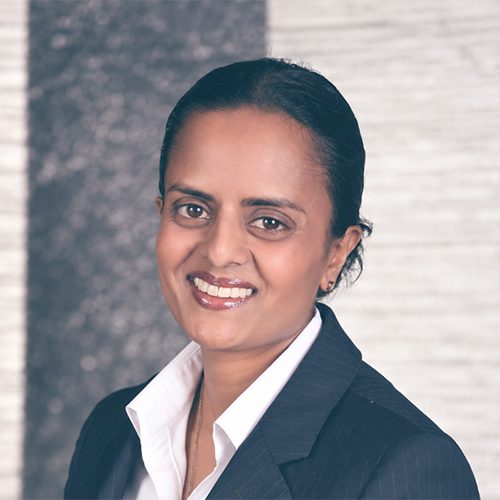
Kiran Rouzie
Global Head of Organizational Transformation & Change, ThoughtworksKiran Rouzie is Global Head of Organizational Transformation & Change at Thoughtworks. A technology leader, certified coach, and change management expert, she works with leaders and organizations to navigate complex change, strengthen adoption, and build high-performing teams. Her work bridges technology and the human side of change, helping organizations turn technology investments into meaningful business outcomes.
Speakers
-


Grazi Mendes - Head of diversity, equity and inclusion Americas, Thoughtworks
-
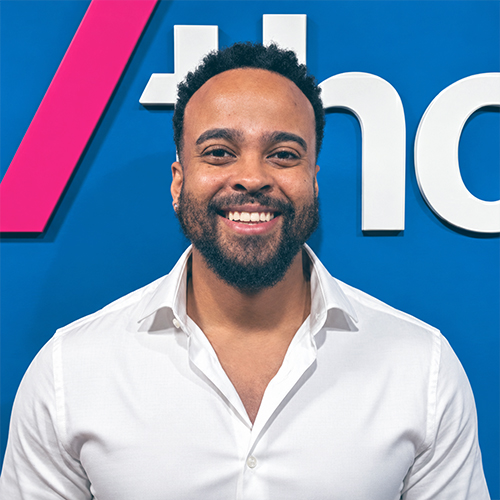

Stepheson Mesquita - Talent Acquisition Senior Manager, Thoughtworks
-


Iana Chan - Founder & CEO, PrograMaria
-


Mariana Zaparolli, Director of Digital Capabilities and Accelerators - LATAM Airlines
-


Thuany Junqueira - Lead Data Scientist, Thoughtworks
-


Rafael Morelo, Senior Director of Data, AI & Analytics - Grupo Guanabara
-
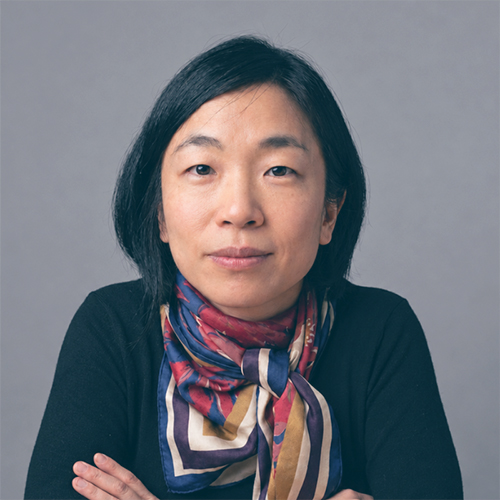

Regina Murakoshi - Principal Tech Partner & Product Manager, Thoughtworks
-


Susana Burgos - Context Lead, Product Enablement & Agility, LATAM Airlines
-


Premanand Chandrasekaran - Tech Director, Thoughtworks
-
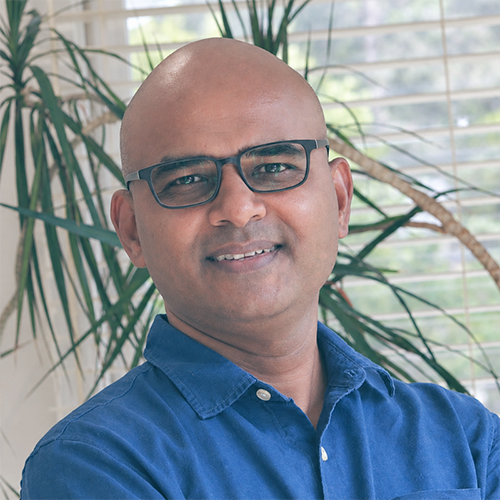

Pramod J. Sadalage - Distinguised Engineer, Thoughtworks
-


Javiera Laso, Lead - Tech Lead/Solutions Architect, Thoughtworks
-


Shea Clark-Tieche - Principal Tech Partner & Product Manager, Thoughtworks
-


Jason Wolfe, Strategist, EMPC - Thoughtworks
-


Fabio Leite - Senior QA Engineer, Thoughtworks
-


Andrea Santacruz - Developer, Thoughtworks
-


Slin Castro, Technical Principal - Thoughtworks
-


Chris Kramer - Head of AI - Americas, Thoughtworks
-


Nate Schutta - Regional CTO, Thoughtworks

XConf Americas 2026 - Agenda
08:00 - 09:00
09:10 - 09:20
Renan Martins & Alexey Boas
09:25 - 10:05
TBC
10:25 - 11:05
Grazi Mendes (Thoughtworks), Stepheson Mesquita (Thoughtworks), Iana Chan (PrograMaria) & Mariana Zaparolli (LATAM Airlines)
AI agents are changing how technology teams work, taking on tasks that have traditionally been part of the learning journey for junior technologists. As productivity accelerates, the path to learning and expertise is changing too.
This panel explores the tension between AI-amplified performance and genuine expertise, the experiences that remain essential for developing critical thinking and judgement, and the evolving meaning of seniority in technology. The conversation will also examine how these changes could reshape access and opportunity, creating new pathways for some while potentially introducing new barriers for the next generation of tech talent.
11:10 - 11:30
Thuany Junqueira (Thoughtworks) & Rafael Morelo (Grupo Guanabara)
Grupo Guanabara set out to modernize a complex ticket pricing process involving machine learning, real-time decisions, business rules and expert knowledge. But the solution became the starting point for something bigger: building the technological foundations for a data-driven organization. This session explores how a modular, event-driven architecture, a modern MLOps ecosystem and shared AI capabilities helped move beyond an isolated machine learning initiative, creating a foundation for new AI products, intelligent agents and human-in-the-loop decision-making.
11:35 - 11:55
Regina Murakoshi (Thoughtworks) & Susana Burgos (LATAM Airlines)
LATAM Airlines reduced P85 Time to Market by 69%, from 275 days to 85 days, across more than 20 squads using an AI-native product development lifecycle. But the biggest impact didn’t come from generating code. It happened earlier, in Discovery and Definition. This session shares the results of a six-month study, including audited metrics and validated hypotheses, showing how AI helped improve decision artifacts and reduce Build time by 84%. It offers a practical, evidence-based look at scaling AI across software delivery with measurable business results.
12:00 - 12:20
Premanand Chandrasekaran (Thoughtworks) & Pramod Sadalage (Thoughtworks)
As AI moves from chatbots to autonomous agents, the challenge is shifting from smarter models to the data they rely on. Agentic systems need more than searchable information. They need data that is trusted, contextual, traceable, governed and ready to support real-world actions. This session explores the data foundations behind dependable agentic AI, from architecture and governance to the operational practices that help move AI beyond promising demos and into resilient production systems.
12:40 - 13:40
13:55 - 14:15
Javiera Laso (Thoughtworks)
A backlog of more than 3.8 million unclassified images, documents and videos would have required nearly 100,000 hours of manual work, at an estimated cost of approximately $10 million. This session explores how a production-grade machine learning workflow automated asset classification with approximately 97% accuracy, using a secure, resilient and event-driven AWS architecture built to process millions of assets without disrupting existing services. It also shares how the solution became a reusable foundation for bringing machine learning into enterprise products and future intelligent automation.
14:20 - 14:40
Shea Clark-Tieche (Thoughtworks)
What if you could test what works before committing to a major technology investment? Working with a Fortune 50 retailer on a $400M vendor income leakage opportunity, the team used small, AI-assisted experiments to test data readiness, contract capture and leakage scenarios before building anything. This session explores how that experiment-led approach turned a complex opportunity into a validated, prioritized roadmap in weeks rather than quarters, and offers a repeatable way to de-risk large-scale platform investments before writing production code.
14:45 - 15:05
TBC
15:10 - 15:30
Jason Wolfe (Thoughtworks)
GenAI is changing who builds software and what they expect from internal platforms. As functional applications can increasingly be created using natural language, the challenge shifts from building a prototype to getting it safely and rapidly into production. Drawing on real-world lessons from Thoughtworks and Meta, this session explores how platform engineering is evolving from reusable components toward agentic skills, orchestration and governance, enabling greater speed without compromising security or quality.
15:50 - 16:10
TBC
16:15 - 16:35
16:40 - 17:00
Jeen Suratriyanont (Thoughtworks)
Design systems were built for human designers and developers. Now AI agents are designing interfaces, writing code, reviewing pull requests and maintaining products, becoming a new kind of consumer of those systems. Drawing on experiments building an agentic design system, this session explores how design systems can evolve beyond component libraries into structured knowledge AI can understand and act on, why traditional documentation may no longer be enough, and the principles teams can use to make their design systems AI-ready.
17:05 - 17:25
Fabio Leite (Thoughtworks)
AI is accelerating software development, but quality feedback can still be slow, complex and increasingly non-deterministic. Adding more automation or LLM-based evaluations can help, but it can also introduce another feedback loop to maintain. This session explores a practical path from probabilistic evaluations to deterministic checks embedded in the software development lifecycle. It looks at how teams can use evaluations to understand complex quality problems, identify what can be verified deterministically, and turn those insights into fast, repeatable and trustworthy checks that keep pace with AI-assisted and agentic software delivery.
17:30 - 17:50
Andrea Santacruz (Thoughtworks) & Slin Castro (Thoughtworks)
AI can generate code in seconds, but building software you can trust is still the hard part. After working with AI-powered products, coding agents and context-aware platforms, the limits of vibe coding become clear as code generation accelerates and intuition alone stops being enough. Drawing on real-world successes, failures and lessons learned, this session explores the shift from prompt to context engineering, why manual review no longer scales, and how specifications, automated validation and deterministic engineering practices can help keep AI-assisted software reliable, maintainable and production-ready.
17:55 - 18:15
Tom Clement Oketch (Thoughtworks)
Modern observability assumes you can put an agent on the machine. But when customers lease GPU infrastructure, that assumption breaks: you can be responsible for the hardware without being allowed to log into it. This session shares lessons from building observability for a GPU cloud provider across 18,432 GPUs. It explores signals across GPUs, hosts, network fabrics, power and liquid cooling, what remains observable without in-band access, the trade-offs of lower-fidelity alternatives, and the questions that become impossible to answer.
18:35 - 19:15
Kiran Rouzie - Global Head of Organizational Transformation & Change (Thoughtworks)
AI investment doesn’t automatically translate into business value. Even well-funded initiatives can stall after rollout if people aren’t using AI confidently and competently in their daily work.
Organizations seeing results aren’t just deploying AI faster. They’re focusing on how adoption actually happens. This keynote explores the human side of AI and the connection between adoption, utilization and ROI, and how organizations can bridge the gap between AI investment and measurable business value.
AI adoption isn't the finish line. Business value is.
19:20 - 19:30
Renan Martins & Alexey Boas
19:30 - 20:30
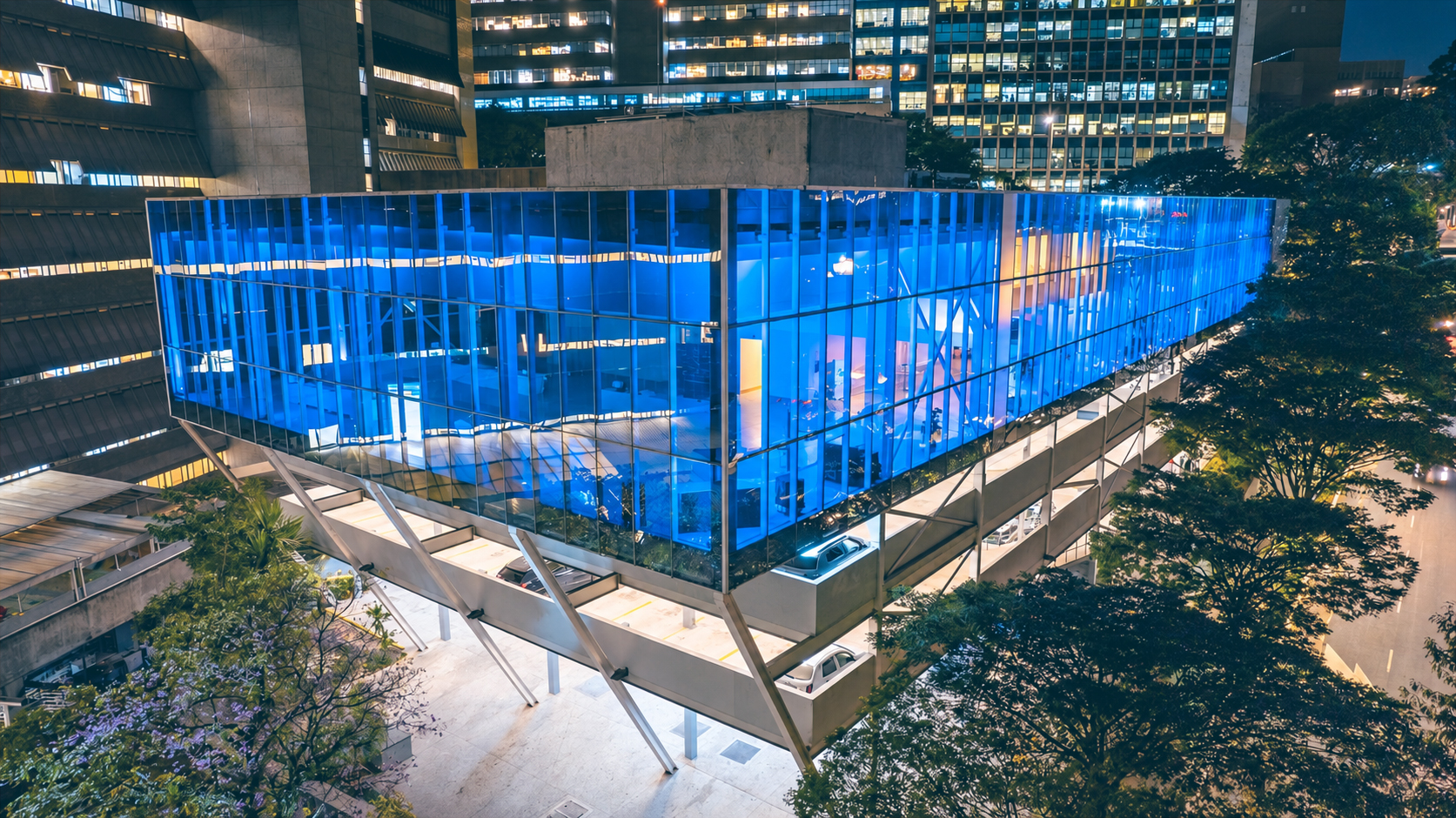
Rebouças Convention Center
This year, XConf Americas 2026 will take place in São Paulo on November 5 at the Rebouças Convention Center (Av. Rebouças, 600), bringing together people passionate about technology to explore innovative ideas, topics and perspectives.
The venue is located just a few minutes from Clínicas Metro Station (Line 2-Green), making it quick and easy to reach by public transportation. For those driving, parking is available on-site. The entire venue is fully accessible for people with disabilities or reduced mobility.
Why attend XConf?
Get access to practical insights from some of the most respected technologists in the industry. You’ll walk away with ideas and tools you can apply right away to strengthen your technical craft.
Connect with Thoughtworks experts, clients, partners and other people passionate about technology. Every conversation is a chance to grow your network and spark new opportunities.
Leave with fresh perspectives and the confidence to drive innovation within your team and organization.