













Thank you to everyone who joined us. The event recording will be available shortly.


For over a decade, XConf has been our flagship event for technologists, by technologists who care deeply about software and its impact on the world. With a focus on high-quality topics, XConf offers a unique opportunity to explore bold ideas, challenge yourself with fresh perspectives and connect with like-minded technologists.
This October, we return to Singapore for a one-day event that brings together inspiring talks, engaging discussions and a vibrant community of technologists.
When: Friday October 2, 8:30am - 5:00pm
Where: Ballroom 1, Level 3, The Westin Singapore, 12 Marina View, Asia Square Tower 2, Singapore 018961
Why attend XConf
- Actionable insights grounded in expertise: XConf is built on Thoughtworks’ and our clients’ years of experience tackling complex problems across industries and markets, so you’ll leave with practical takeaways you can use right away.
Deep technical knowledge: For over 30 years, Thoughtworks has been at the forefront of technological innovation, introducing groundbreaking practices like continuous delivery and infrastructure as code.
A diverse lineup: XConf APAC brings together Thoughtworks technologists across the region to provide perspectives and insights from a broad range of backgrounds and experiences.
Agenda
8:30am - 9:00am
9:00am - 9:05am
9:10am - 9:40am
Tracy Moore from MYOB and May Xu
Over the past 18 months, MYOB built an AI product capability from the ground up: New teams, new platforms, new operating rhythms, and a growing portfolio of customer-facing AI products. The most important decisions weren’t technical. They were strategic.
This talk explores how MYOB matched the pace of decisions to the pace of change: When to hack around legacy systems, standardize or stay flexible, build or buy, reshape teams, and prioritize learning over shipping. The goal isn’t simply to move faster, but to know what deserves to move fast — and what deserves time to compound.
AI moves fast, but not every decision should.
9:45am - 10:20am
Tyson Brown
I spent 26 months building a distributed database in Rust with heavy AI help. Three times, AI nearly broke it. Code that compiled, passed tests, benchmarked well, but would have corrupted data in production. Each failure looked like success.
The consensus says AI takes the coding while humans move up to design and testing. It's backwards. AI belongs on the disposable edges. Humans belong in the middle, holding the understanding no test can verify from outside.
This talk is those three near-misses, the research behind them, and Human Replay: the method that keeps the understanding yours.
10:20am - 10:50am
10:50am - 11:25am
Bishnu Prasad and Pratyush Mittal
AI chatbots now handle our banking, healthcare, and support but how do we know they're safe? Unlike traditional software, the same question can get a helpful answer one moment and a wrong, unsafe, or manipulated one the next, and a human tester chatting for an hour barely scratches the surface.
This talk introduces AI SimTest: an engine that uses AI to test AI. It generates hundreds of simulated users, including adversarial ones, runs real conversations against any bot, and judges every response for accuracy, safety, and compliance. We'll show how "AI testing AI" catches failures before real people do.
11:30am - 12:05pm
Amit Upadhyay
Multi-agent pipelines fail differently from single agents. One agent gets it wrong and you see it. A pipeline compounds wrong assumptions invisibly — each agent confidently consuming the uncertain output of the last.
This is the contract problem: when one agent's output is another's input, how do you encode what it doesn't know?
We built and deployed this in production. Two agents, one analysing, one transforming, passing a typed contract between them. Every field carries a confidence level. A gating mechanism stops the pipeline when certainty falls below threshold.
Agents don't fail — they guess. Build your contracts like that's true.
12:10pm - 12:45pm
Jessie Xia and Siyuan Li
AI is changing software delivery, but the real breakthrough is not just making individual developers faster. It is redesigning delivery around AI-native squads.
In this talk, Jessie Xia and Siyuan Li will share how small, high-transparency teams of 3–6 people can deliver business outcomes faster by embedding AI across every role — product engineer, quality manager, and domain expertise. Through real delivery examples, they will show how team structure, ceremonies, and daily workflows change when AI becomes a shared team capability.
The talk will also look ahead to harness-driven agentic delivery, where humans guide intent and quality while autonomous agents assist with execution. Mastering the AI-native squad model today is the foundation for the future of software delivery.
12:45pm - 1:45pm
1:45pm - 2:20pm
Vijay More
Production incidents are costly, chaotic, and deeply manual. Engineers sift through logs, metrics, configs, and code under pressure, often with no clear starting point. Agentic AI changes that.
In this talk, Vijay presents a live demo of First Responder, an agentic system that investigates production incidents end-to-end. Starting from an alert, automatic triaging and closes the loop with automated fix generation and pull request creation, with engineers staying in control throughout.
2:25pm - 3:00pm
Xiaowen Zhuang and Hao Pan
Architecture Decision Records often die the moment they are written: approved, archived, and quickly ignored as teams and systems evolve. In the age of AI, that could change.
In this talk, two solution architects show how ADRs can become living, versioned specifications that guide implementation, shape AI-assisted workflows, and support continuous governance across many teams. We explore how documents become machine-consumable context, how architectural intent can be traced into code and review loops, and how AI can help reduce drift. The deeper shift is socio-technical: designing not just systems, but the environment that keeps them aligned.
3:00pm - 3:30pm
3:30pm - 4:05pm
Kate Linton
As AI agents rush into every product roadmap, it’s become dangerously easy to optimise for what AI can do, rather than what people actually need. Many teams are shipping AI-first features that are impressive in demos but fragile in the real world: eroding trust, amplifying bias, or quietly adding cognitive load.
In this talk, I’ll share a practical approach to keeping humans at the centre of AI-first product design. We’ll look at how to frame problems in human terms before choosing models, how to design for consent, control and transparency, and how to use guardrails and hypothesis-led experimentation to balance desirability with safety, accountability and economic impact.
4:10pm - 4:45pm
Shangqi Liu
AI factories promise massive compute, but GPUs alone do not create a productive AI platform. The challenge is to make thousands of accelerators, networks, power systems, cooling infrastructure, and facilities operate as one reliable, efficient system.
Drawing on first-hand experience building AI datacenter infrastructure, this talk explores the engineering platform behind the AI factory: Kubernetes, topology-aware orchestration, inference serving, developer workflows, high-resolution telemetry, resilient data pipelines, and power/grid-aware scheduling. We examine the architectural principles and trade-offs required to turn scarce, expensive infrastructure into production AI that is operable, scalable, and trustworthy.
4:50pm - 4:55pm
Meet the keynote speakers

Tracy Moore
General Manager of AI and Data, MYOB
Tracy Moore is General Manager of AI and Data at MYOB. She built the function around one rule: customer data safety first, speed to market second, everything else negotiable. In 18 months, the team has shipped real AI products to benefit Australian small businesses, building fast and learning faster along the way. Her core skill is matching the pace of a decision to the pace of what's actually changing, not the noise around it.

May Xu
Regional Head of Technology, APAC, Thoughtworks
As a leader in applying AI to evolve software delivery., May advises clients on large-scale digital transformations and shapes regional technology strategy, with a current focus on AI-first approaches. Her expertise includes technology strategy, architecture, digital platforms, engineering practices, organisational design and building high performance teams.
XConf APAC 2026 speaker line-up

Amit Upadhyay
Lead Consultant, Thoughtworks
As a Technical Principal with 11+ years of experience shipping software, Amit leads AI-first software delivery, helping engineering organisations move from AI experiments to production systems that hold together.
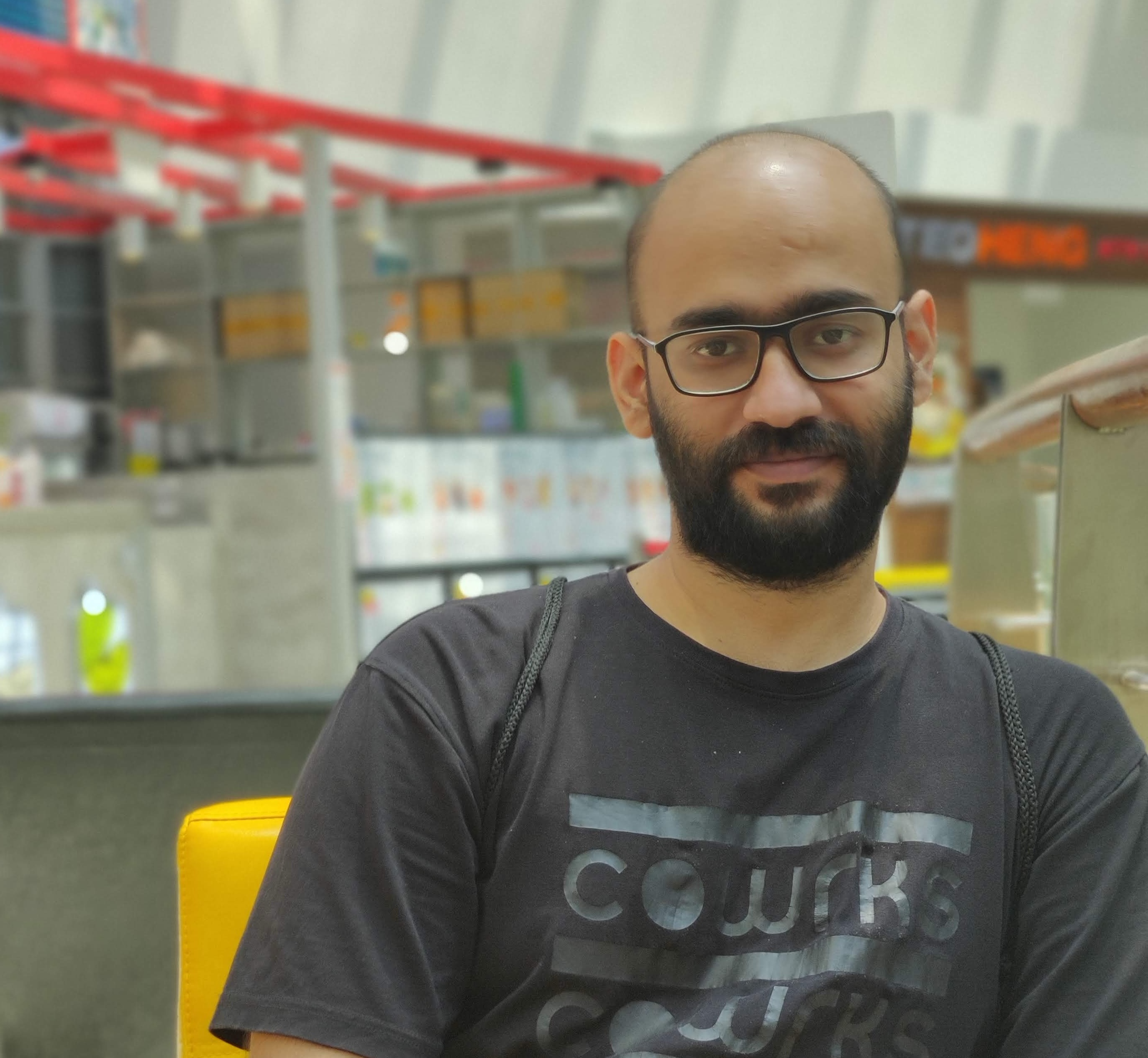
Bishnu Prasad
Senior Consultant, Thoughtworks
Bishnu is a QA specialist focused on functional and automation testing, actively using AI in day-to-day testing workflows and exploring AI testing at scale across current public sector engagements.
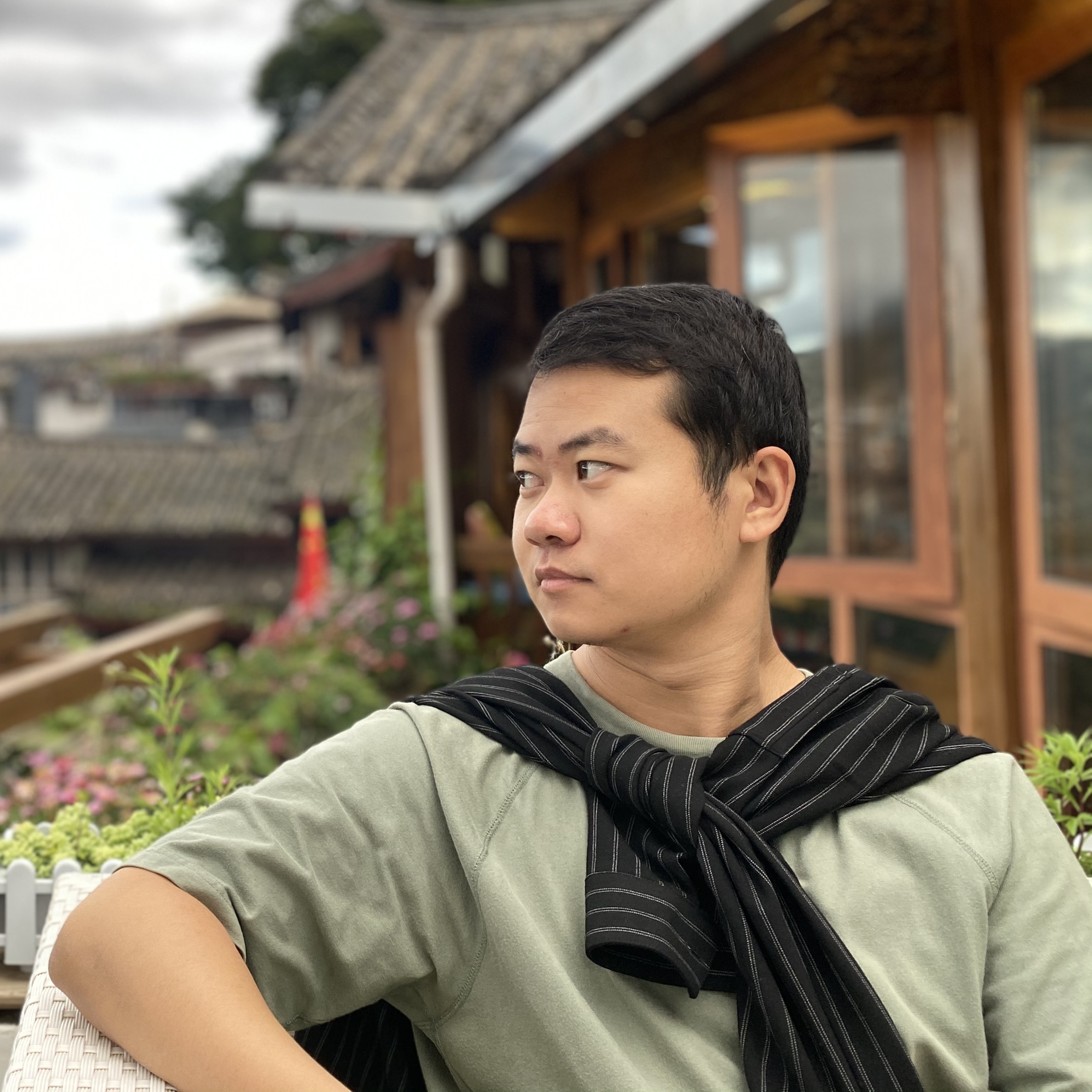
Hao Pan
Principal Consultant, Thoughtworks
With over a decade of experience in software engineering and enterprise architecture, Hao specializes in designing large-scale distributed systems. Beyond pure technology, he is a strong advocate for socio-technical architecture.
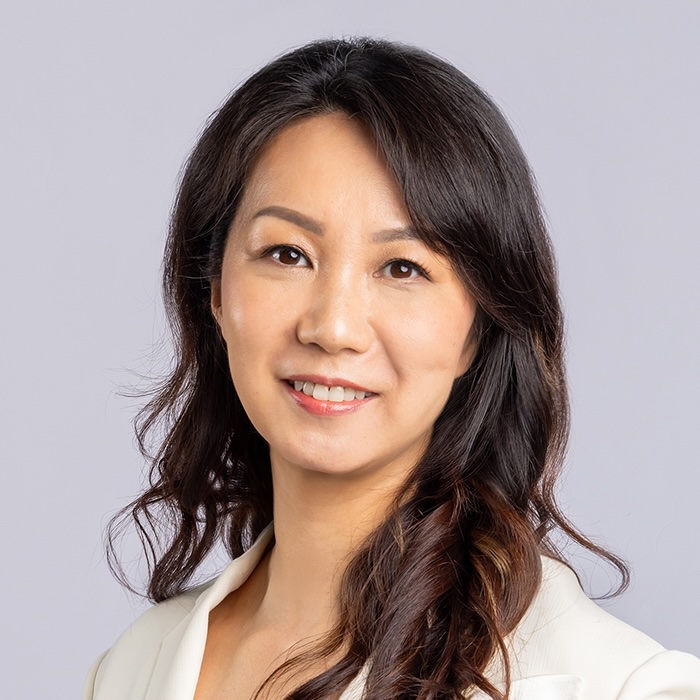
Jessie Xie
SVP & Global CIO, Thoughtworks
Jessie leads Thoughtworks' Global IT Services function, driving the AI-native transformation across software delivery, knowledge management, enterprise platforms, and IT operations. Jessie focuses on reimagine how teams work, deliver, and scale in the AI era.

Kate Linton
Experience Design Principal, Thoughtworks
An accomplished design leader, Kate focuses on the ethical application of AI, ensuring a "human-in-the-loop" philosophy remains at the heart of AI innovation. Her recent work focuses on guiding and supporting teams to transition into AI-first ways of working.
Pratyush Mittal
Principal Product Manager, Thoughtworks
Pratyush is a Principal Product Manager with deep experience shaping complex digital products, leading discovery and delivery, and working closely with cross-functional teams on large public sector accounts.
Shangqi Liu
Principal Consultant, Thoughtworks
Shangqi is a technology leader with extensive experience designing complex software systems, modernizing large-scale platforms, and building engineering capabilities across various industries.
Siyuan Li
Lead Consultant, Thoughtworks
Currently leading AI-native team transformation for Global IT Services at Thoughtworks, Siyuan has 8+ years of experience building enterprise systems, a full-stack engineering background, and hands-on experience as Tech Lead on multiple 0-to-1 platforms.
Tyson Brown
Lead Consultant, Thoughtworks
Tyson has been shipping software since 2005, across mining, medical devices, MRI physics, and distributed systems. In his spare time he built Celeriant, a distributed event-sourcing database in Rust that sustains 1,057,000 durable writes a second on two nodes, with strict ordering and per-aggregate reads.

Vijay More
Lead Consultant, Thoughtworks
As the sole author of First Responder, Vijay has over 14 years of experience architecting and building large-scale systems across application development, cloud-native infrastructure, and DevOps.
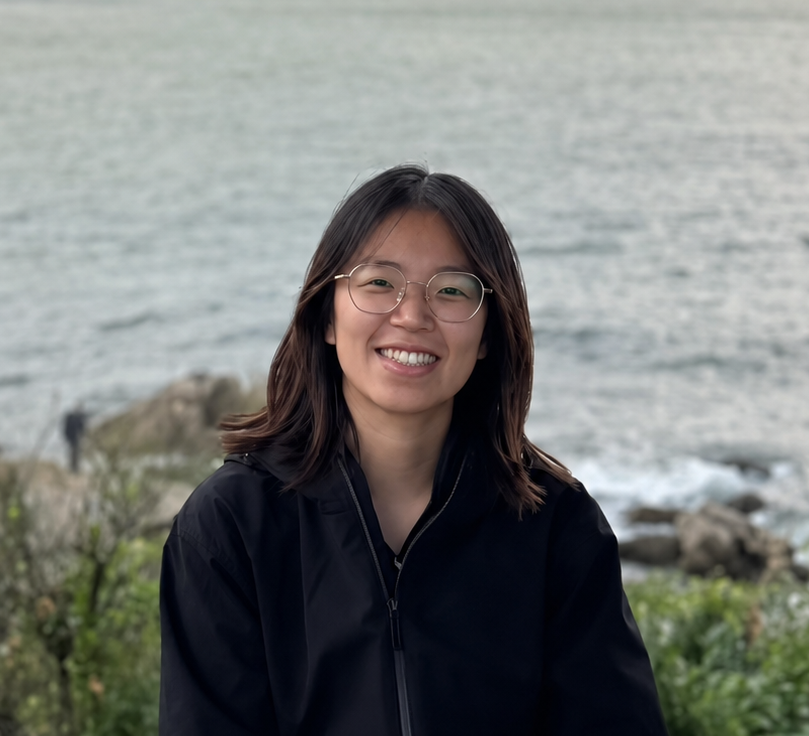
Xiaowen Zhuang
Senior Consultant, Thoughtworks
Xiaowen Zhuang is a full-stack engineer transitioning into solution architecture. Her experience ranges from low-level embedded software to large-scale enterprise systems, with recent work focused on architecture, security, delivery governance, and engineering practices across complex multi-team environments.